
Strong credit union fraud detection means catching these patterns before they cost you money. In a recent blog post we introduced Multi-Source ID Verification (MSID). This is a single, configurable score built from everything NestEgg already sees about an applicant, with a 2+2 compliance gate and warning flags that pull cases for manual review.
We built MSID around the most common ways fraudsters target credit unions. Here are five most common fraud typologies, and how our new checks help close each gap.
Stolen identity
A fraudster uses a real identity taken from someone recently deceased, often with a light credit file and few recent searches. MSID provides a possible deceased match warning which overrides the score and forces a Refer, regardless of how strong the application looks. Loan Officers can then request an Open Banking connection to name-match a second, independent signal that’s much harder to fake.
Last-minute mandate switch
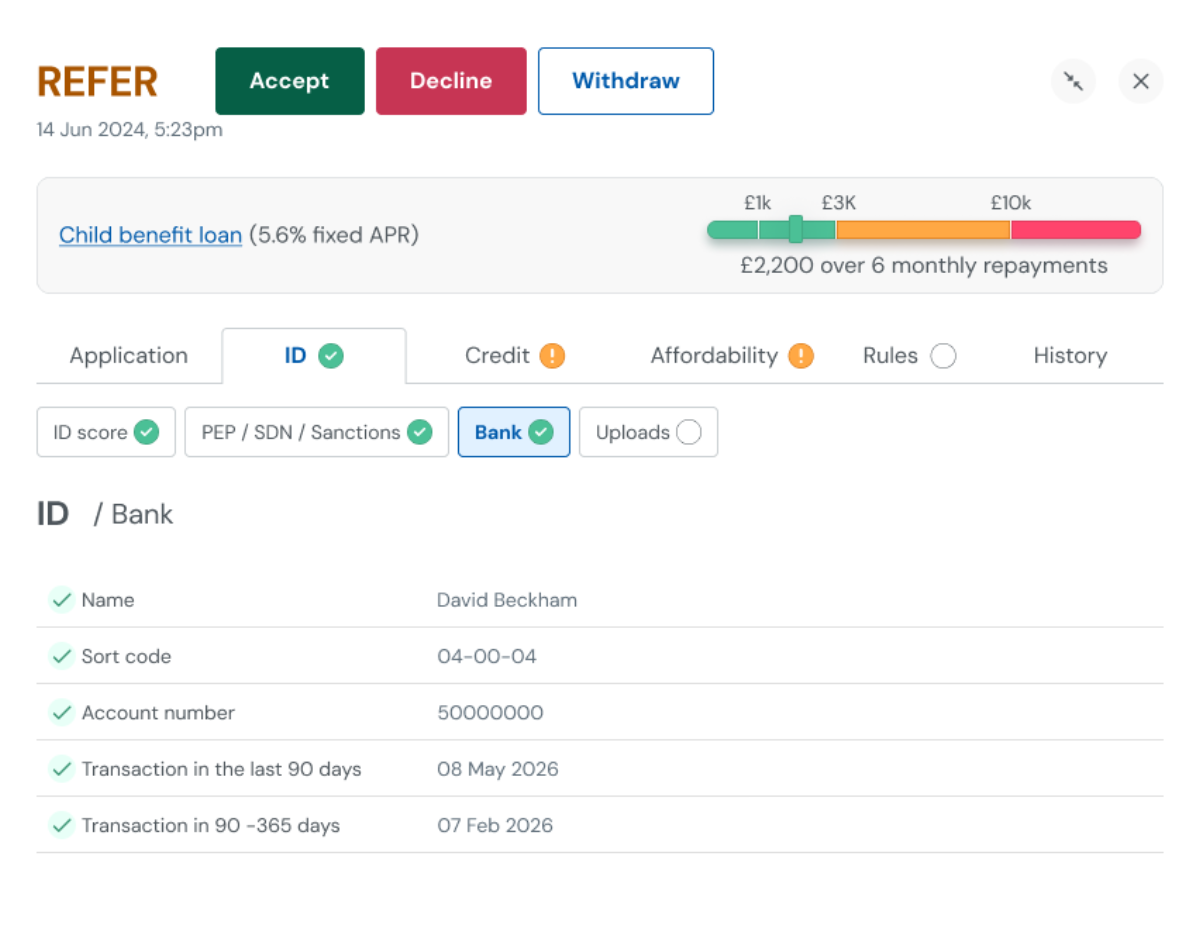
This approach is becoming increasingly common. A fraudster requests a last-minute change to the payout bank account, after the identity check has already passed, exploiting the gap between approval and disbursement. NestEgg’s Bank Ownership check catches this by verifying the account name, number, and sort code against what was declared. Any mismatch flips the result to Refer. Rule of thumb: if you accept, always pay out to the Open Banking-connected account.
Thin file exploitation
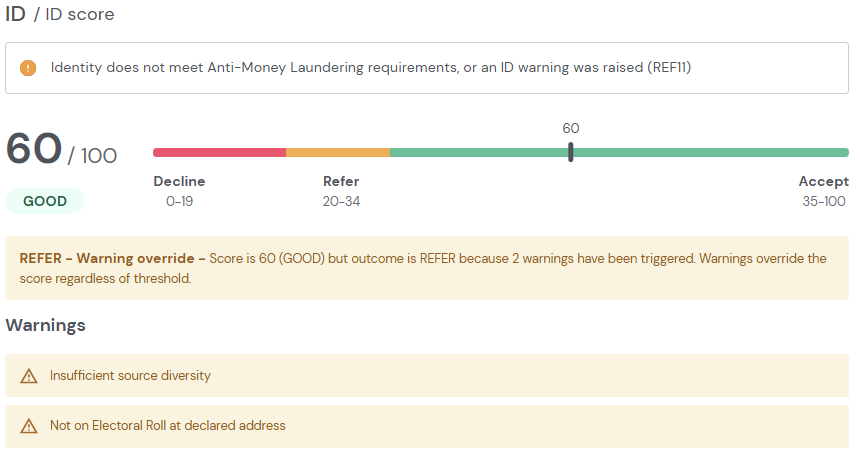
An applicant with a thin credit file with nothing negative on it can still score high, which is the classic auto-accept blind spot. The 2+2 compliance requirement closes this. Even above the Accept threshold, the outcome downgrades to Refer unless at least two independent sources (e.g. two credit accounts, or the electoral roll) confirm identity. Thin files struggle to produce two sources, so they get a closer look instead of a nod-through.
Multi-lender applications
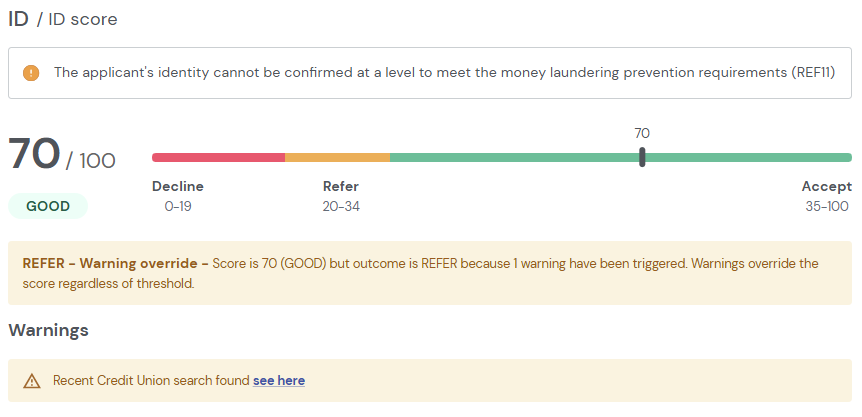
Fraudsters apply to several credit unions in quick succession, betting each will assess in isolation before shared credit data catches up. A credit union search detected warning flag triggers when another search appears on the applicant’s file within 12 months. Importantly, if this flag is raised the application is pushed to Refer for a human look, rather than letting velocity go unnoticed. The best next step is to request an Open Banking connection and then check the name matches the applicant and do not switch payment methodology at the last minute.
First payment defaulter
A reasonable credit score, thin file, and no Open Banking connection can still result in an accept. But the applicant takes the loan and immediatly defaults. Because MSID scores an Open Banking name match as one of its five data sources, and flags Bank Ownership as incomplete without it, this typology now shows as weaker and flagged. Rather than slipping through on credit score alone.
Credit union fraud detection: the pattern behind the pattern
Every scenario above exploits reliance on a single signal or a single point-in-time check. MSID forces corroboration: multiple sources, a two-source minimum for any Accept, and warning flags that override the score when something doesn’t add up. Nothing new to integrate, it runs on data you’re already getting.
You don’t need to use NestEgg for full loan decisioning. ID checks can run on a per-decision basis.
Book a demo to see these in action.
Book a demo now

Get insights into responsible lending
Enter your email to get insights once or twice a month
No spam. Unsubscribe anytime.